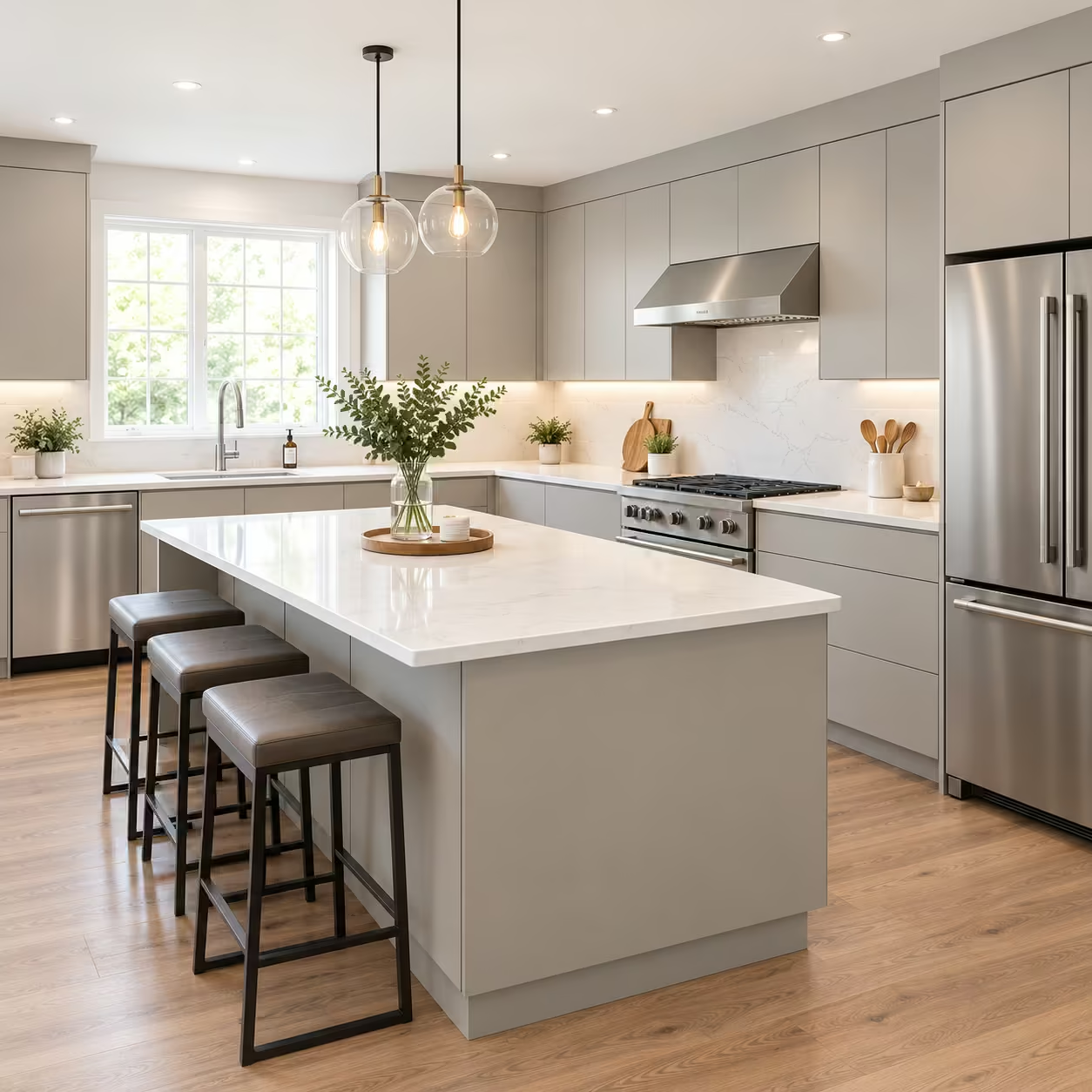
Flat-panel kitchen cabinets, also called slab cabinets, have a simple door design with a smooth, uninterrupted front. Unlike Shaker or raised-panel doors, they have no recessed center panel, decorative frame, or raised detailing.
Their clean appearance makes flat-panel cabinets especially popular in modern, contemporary, minimalist, and Scandinavian-inspired kitchens. But the door style is only the starting point. The material, finish, construction, hardware, and cabinet layout all affect the final look, durability, maintenance, and cost.
What are Flat-Panel Kitchen Cabinets?
Flat-panel cabinets have doors and drawer fronts made with a single, flat surface rather than a framed or recessed design.
The simple profile puts more emphasis on the material, color, finish, hardware, and surrounding kitchen elements. A matte painted door can create a very different look from a high-gloss acrylic or natural wood veneer door, even though both use the same flat-panel design. Flat-panel cabinets are also commonly called:
- Slab cabinets.
- Slab-door cabinets.
- Flat-front cabinets.
- European-style cabinets.
The terms can overlap, but "flat-panel" primarily describes the door style, not the material or quality of the cabinet.
Related Read: All About Kitchen Cabinets
What Materials Are Used for Flat-Panel Cabinets?
One of the biggest advantages of flat-panel cabinets is the range of materials available. The same door style can be made to fit different budgets, maintenance preferences, and design goals.
- Solid Wood: Solid wood can provide natural grain, warmth, and a premium appearance. Wood flat-panel doors can be stained to emphasize the grain or painted for a more uniform look. It's best for homeowners who prioritize natural materials, longevity, and the option to refinish their cabinets.
- MDF: Medium-density fiberboard (MDF) has a smooth, consistent surface that works particularly well with painted flat-panel doors. It's best for painted cabinets and homeowners who want a clean, uniform finish.
- Plywood: Plywood is frequently used in cabinet construction because of its strength and stability. It can be used for cabinet boxes and, depending on the manufacturer, other cabinet components. It's best for homeowners prioritizing durable cabinet construction.
- Laminate: Laminate uses a decorative surface bonded to an engineered core. It is available in solid colors, patterns, and wood-look finishes. It's best for busy kitchens where durability, easy maintenance, and design flexibility are priorities.
- Thermofoil: Thermofoil consists of a vinyl surface formed over an engineered core. It can create a smooth, consistent appearance and is available in a variety of colors and finishes. Its best for homeowners looking for a clean appearance and relatively easy maintenance at a lower price point.
Popular Flat-Panel Cabinet Finishes
The finish can change the entire personality of flat-panel cabinets.
- Matte Finishes: Matte finishes create a soft, understated appearance and work well with minimalist and contemporary designs. They can also provide a less reflective look than high-gloss cabinetry.
- High-Gloss Finishes: High-gloss finishes create a reflective surface that can make a modern kitchen feel brighter and more dramatic. The trade-off is that fingerprints, smudges, and fine scratches can be more noticeable on highly reflective surfaces.
- Wood-Grain Finishes: Natural wood or wood-look finishes add warmth and texture to the simple flat-panel profile. A wood-grain slab door can soften a minimalist kitchen and prevent an all-modern design from feeling overly stark.
- Painted Finishes: Painted MDF or wood flat-panel doors provide a consistent color and can be used in everything from soft neutrals to bold statement colors. White, gray, beige, green, blue, and other muted tones can all work with a flat-panel design.
Related Read: High Gloss vs Matter Finish for Kitchen
How Much Do Flat-Panel Kitchen Cabinets Cost?
There is no single price for flat-panel cabinets because the door style itself does not determine the total cost. Pricing can vary based on:
- Cabinet material.
- Cabinet construction.
- Finish.
- Kitchen size.
- Number of cabinets.
- Customization.
- Storage accessories.
- Hardware.
- Installation.
- Layout changes.
A basic laminate or thermofoil flat-panel cabinet may cost considerably less than a custom wood or premium-finish cabinet.
For that reason, comparing cabinets strictly by "flat-panel" versus another door style can be misleading. Two flat-panel kitchens can have very different prices because the specifications behind the doors are different.
Are Flat-Panel Cabinets More Affordable Than Shaker Cabinets?
Not necessarily. Flat-panel doors can have a simpler manufacturing profile, but the material and finish can have a much larger effect on the final price.
For example, a premium wood-veneer flat-panel cabinet can cost substantially more than a basic Shaker cabinet made from a different material. If cost is a major consideration, compare:
- Door material.
- Cabinet box construction.
- Finish.
- Hardware.
- Storage accessories.
- Installation.
This gives you a more accurate comparison than looking at door style alone.
Related Read: Shaker Style Cabinets
Pros and Cons of Flat-Panel Kitchen Cabinets
Advantages
- Clean, modern appearance: The uninterrupted door surface creates a streamlined look without decorative detailing.
- Easy to clean: With fewer grooves, edges, and recessed areas, flat-panel doors are generally simple to wipe down.
- Wide range of materials: Flat-panel doors can be produced in wood, MDF, laminate, thermofoil, and other finishes.
- Works well with modern hardware: Bar pulls, edge pulls, and other streamlined hardware complement the simple profile.
- Flexible color and finish options: The uncomplicated door design provides a clean backdrop for everything from natural wood grain to bold colors.
Potential Drawbacks
- Imperfections can be more visible: Because the door surface is simple, dents, scratches, poor alignment, or inconsistent finishing can stand out.
- Some finishes show fingerprints easily: Glossy and darker surfaces can require more frequent wiping.
- Less decorative character: If you prefer traditional detailing or architectural dimension, a flat-panel door may feel too minimal.
- Material quality matters: A simple door does not automatically mean a high-quality cabinet. The substrate, construction, edge treatment, hardware, and installation all matter.
What Hardware Works Best With Flat-Panel Cabinets?
Flat-panel cabinets work with many hardware styles, but streamlined hardware tends to reinforce their clean appearance. Popular options include:
- Bar pulls.
- Edge pulls.
- Knobs.
- Integrated or recessed pulls.
- Handleless opening systems.
Hardware can also provide contrast. For example, black pulls against light cabinetry can become a design feature rather than simply a functional element. If you're choosing cabinet hardware, coordinate the finish and scale with the cabinet color, countertops, appliances, lighting, and other fixtures.
What Should You Look for When Buying Flat-Panel Cabinets?
Don't evaluate a flat-panel cabinet based only on its appearance. Before choosing a product, ask about:
- Find out whether the door is solid wood, MDF, plywood, laminate, thermofoil, or another material.
- The cabinet box is just as important as the visible door. Ask what material is used and how the components are constructed.
- Look closely at the consistency of the finish, especially on painted, glossy, and wood-grain surfaces.
- Flat-panel doors have exposed edges, so edge construction can affect both appearance and long-term performance.
- Check the quality of hinges and drawer slides. Soft-close hardware can improve everyday usability.
- Flat-panel designs have clean lines that can make uneven spacing or misalignment more noticeable. Professional installation can help ensure consistent reveals and alignment.
- Review what the manufacturer's warranty covers, including the doors, finish, hardware, and cabinet construction.
Related Read: How to Choose Kitchen Cabinets
Is a Flat-Panel Kitchen Cabinet Right for You?
Flat-panel cabinets may be a strong choice if you want:
- A clean, uncluttered kitchen.
- A modern or contemporary appearance.
- Easy-to-clean cabinet fronts.
- A wide selection of materials and finishes.
- Minimal decorative detailing.
- Flexibility with hardware and surrounding finishes.
They may be less suitable if you prefer ornate traditional cabinetry or want substantial decorative detail built into the cabinet doors.
The most important point is that the flat-panel describes the door style, not the overall quality of the cabinetry. Material, construction, finish, hardware, and installation can make a much bigger difference in performance and price.
Related Read: Complete Kitchen Remodeling Guide
Final Thoughts
Flat-panel kitchen cabinets offer a clean cabinet profile with plenty of room for customization. The biggest decisions are not just about the door style but about what the door is made from, how it is finished, how the cabinet box is constructed, and how everything works together in the kitchen.
If you're planning a kitchen remodel, compare complete cabinet specifications rather than choosing based on appearance alone.
FAQs
Flat-panel cabinets have a simple profile that can adapt to changing kitchen designs. Choosing a durable material, neutral finish, and quality construction can make the design easier to live with long term.
In some remodeling situations, cabinet doors and drawer fronts can be replaced while keeping existing cabinet boxes. Whether this works depends on the condition, dimensions, and construction of the existing cabinets.
There is no universal answer. Resale appeal depends on the overall kitchen design, quality, condition, layout, and local buyer preferences. A well-designed kitchen with quality cabinetry is generally more important than choosing one specific door profile.
Yes. Flat-panel doors can be combined with other cabinet door styles when there is a clear design relationship between the finishes, colors, and hardware. Using flat-panel cabinets on an island while using another door style elsewhere is one possible approach.
In most kitchen-cabinet contexts, the terms refer to the same basic door style: a smooth, flat door front without a recessed or raised center panel. "Slab" is commonly used as another name for a flat-panel cabinet door.