When planning a kitchen remodel, one of the most important decisions is choosing the right layout. The layout affects how efficiently you can cook, how storage is organized, and how family and guests move through the space.
In this guide, we’ll look at six popular kitchen layouts—L-shaped, U-shaped, island, galley, peninsula, and single-wall so you can better understand which one suits your space and lifestyle.
Related Read: Kitchen Remodeling Ideas
How Does an L-Shaped Kitchen Layout Work?
An L-shaped kitchen is one of the most common designs, featuring two connected walls that form a natural “L.”
- Works well in both small and large kitchens.
- Provides open floor space for movement.
- Can include a peninsula or small dining area.
- Offers good workflow when designed with the work triangle in mind.
This layout is ideal for open-concept spaces, where the kitchen flows into the living or dining area.
Why Choose a U-Shaped Kitchen Layout?
The U-shaped kitchen uses three connected walls of cabinetry and appliances, forming a “U.”
- Offers generous storage and counter space.
- Provides efficient workflow with the kitchen work triangle.
- Works best in medium to large kitchens.
- Can include an island if space allows.
This layout is excellent for households where multiple people cook together.
Related Read: What is a U-Shaped Kitchen
What is a Single-Wall Kitchen?
A single-wall kitchen (or one-wall kitchen) is a space-saving design where all cabinets, appliances, and counters are arranged along one wall.
- Perfect for apartments or smaller homes.
- Maximizes vertical storage with shelves or overhead cabinets.
- Can include a peninsula or movable island for extra counter space.
If you’re working with limited square footage, this is often the most practical option.
What is a Peninsula Kitchen Layout?
A peninsula kitchen includes a connected counter extension that creates additional workspace. It functions like an island but remains attached to a wall or cabinet base.
- Maximizes counter space in smaller kitchens.
- Creates a natural divider between the kitchen and adjacent rooms.
- Can double as a breakfast bar or casual dining area.
This layout is especially popular in open-plan homes where space is limited but homeowners still want the benefits of an island.
How Does a Galley Kitchen Layout Work?
A galley kitchen has two parallel walls with counters, cabinets, and appliances, forming a corridor-like workspace.
- Ideal for narrow spaces.
- Provides efficiency with everything within easy reach.
- Can work for both single and multiple cooks.
- Allows for streamlined storage and organization.
Though compact, this design is functional and often used in professional kitchens for its efficiency.
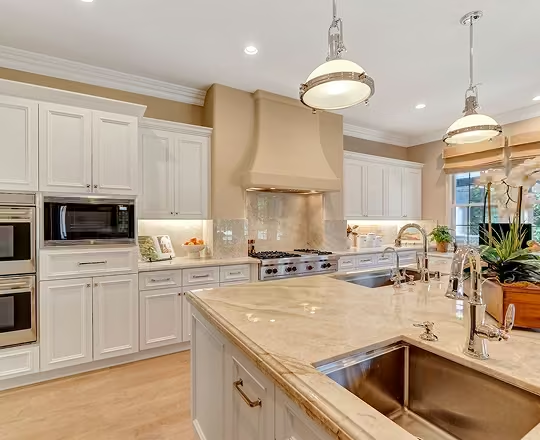
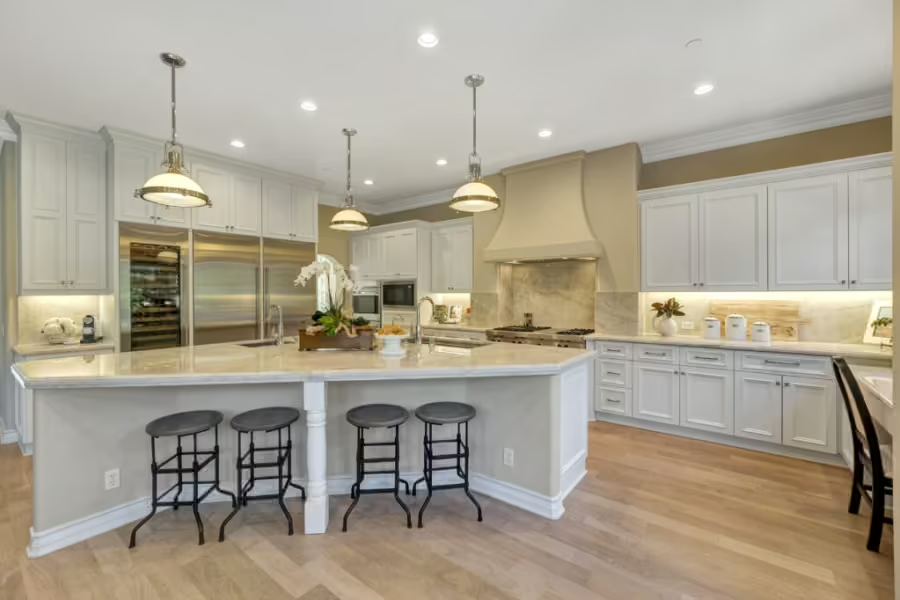
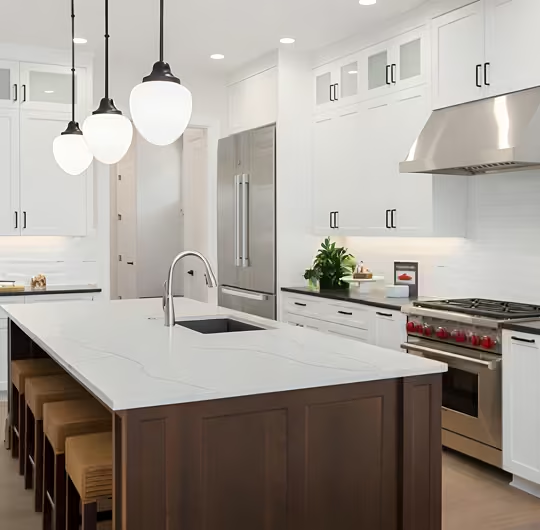
What are the Benefits of a Kitchen Island Layout?
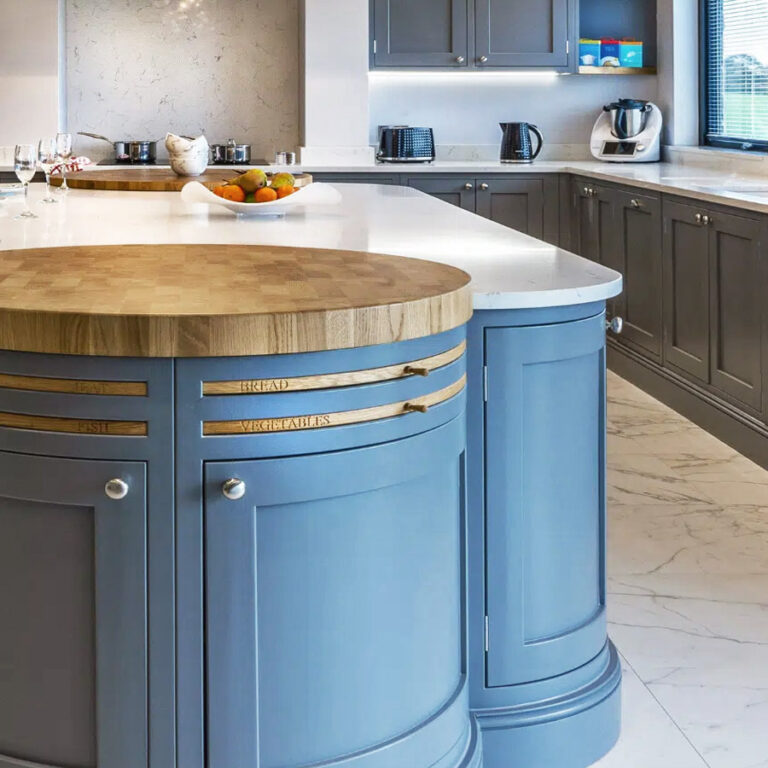
The kitchen island is one of the most desired features in modern homes. An island serves as a freestanding workspace that can include appliances, a sink, or simply additional counter area.
- Adds extra storage and prep space.
- Can be designed as a dining or social hub with stools.
- Offers flexibility in large kitchens.
- Complements L-shaped or U-shaped layouts.
Islands are highly customizable, making them one of the most versatile layout additions.
Kitchen Remodeling vs. Kitchen Renovation: What’s the Difference?
Before finalizing a layout, it helps to understand the distinction between kitchen remodeling and kitchen renovation.
- Remodeling typically involves changing the layout, structure, or functionality.
- Renovation usually means restoring or refreshing existing elements, such as cabinets or flooring.
Read More: Kitchen Remodeling vs. Kitchen Renovation
Final Thoughts
The right kitchen layout depends on your space, cooking habits, and household needs. Whether you prefer the efficiency of a galley kitchen, the openness of an L-shaped layout, or the versatility of a kitchen island, choosing the right design sets the foundation for a functional and enjoyable kitchen.
FAQs
Related Read: What is Cabinet Refacing