Quartz countertops are widely chosen for kitchens because they combine durability with relatively low upkeep. However, “low maintenance” doesn’t mean “no maintenance.” Proper care plays a key role in preserving their finish, preventing damage, and extending their lifespan.
This guide covers everything you need to know, from daily cleaning and long-term care to installation preparation, so you can maintain both the appearance and performance of quartz countertops over time.
What Makes Quartz Countertops Low Maintenance?
Quartz countertops are engineered using natural quartz combined with resins, which creates a non-porous surface. This structure is what makes them easier to maintain compared to many natural stone options.
Key reasons quartz is considered low maintenance:
- Does not require sealing.
- Resistant to stains and moisture absorption.
- Less likely to harbor bacteria due to non-porous surface.
- Easy to clean with basic household supplies.
Because liquids and spills do not penetrate the surface, cleaning becomes quicker and more predictable.
Explore: Quartz Countertops
How Should You Clean Quartz Countertops Daily?
Daily cleaning is simple but important for maintaining the surface finish. Recommended cleaning routine:
- Use a soft cloth or microfiber towel.
- Clean with warm water and mild dish soap.
- Wipe dry to prevent water spots.
For tougher residue:
- Use a non-abrasive cleaner.
- Gently scrape dried spills with a plastic scraper.
Avoid scrubbing aggressively, as it may dull the surface over time.
What Cleaning Products Should You Avoid on Quartz?
Quartz surfaces can be sensitive to certain chemicals. Avoid using:
- Bleach or high-alkaline cleaners.
- Oven cleaners or drain cleaners.
- Solvents like turpentine or methylene chloride.
- Abrasive scrubbers or steel wool.
If harsh chemicals come into contact with the surface, clean immediately with mild soap and water.
How Can You Prevent Stains and Surface Damage?
While quartz is stain-resistant, prevention still matters. Best practices:
- Wipe spills quickly, especially from coffee, wine, or oils.
- Avoid prolonged exposure to acidic substances (vinegar, citrus, tomatoes).
- Use coasters for beverages.
Even resistant surfaces can show marks if spills are left for extended periods.
Do Quartz Countertops Scratch or Chip Easily?
Quartz is scratch-resistant but not scratch-proof. To minimize risk:
- Always use cutting boards when preparing food.
- Avoid dragging heavy or sharp objects across the surface.
- Handle heavy cookware carefully to prevent edge chipping.
Impact damage (like dropping heavy items) is more likely to cause chips than everyday use.
Can Heat Damage Quartz Countertops?
Yes, heat is one of the most common causes of damage. Quartz can tolerate moderate temperatures, but sudden or extreme heat may cause discoloration or cracks.
Heat protection tips:
- Always use trivets or heat pads.
- Avoid placing hot pans directly on the surface.
- Be cautious with appliances that generate heat underneath.
How Does Quartz Compare to Other Countertop Materials?
Quartz is often compared to granite and marble when it comes to maintenance.
| Feature | Quartz | Granite | Marble |
| Sealing Required | No | Yes | Yes |
| Stain Resistance | High | Medium | Low |
| Maintenance Effort | Low | Medium | High |
| Porosity | Non-porous | Porous | Porous |
Quartz stands out for requiring less ongoing maintenance compared to natural stones.
How Do You Choose a Quartz Design that Hides Wear?
Some quartz styles are better at concealing everyday use. Design tips:
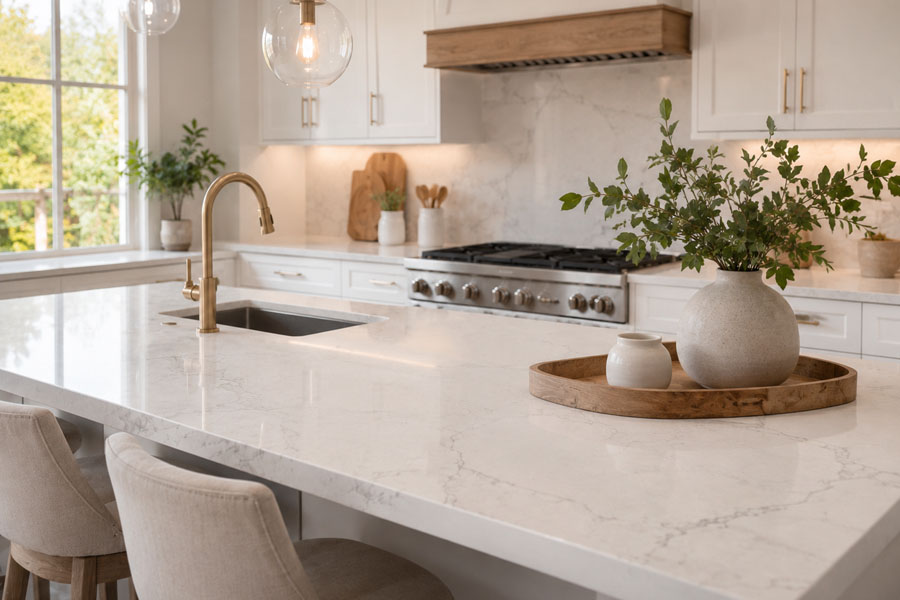
- Choose veined or patterned quartz to mask smudges.
- Avoid solid light colors if you prefer low visibility of marks.
- Matte finishes may show fewer fingerprints than polished ones.
This can reduce how often cleaning is needed to maintain appearance.
What Should You Do Before Quartz Countertop Installation?
Preparation ensures a smoother installation process and prevents delays.
Key steps before installation:
- Ensure cabinets are level and structurally sound.
- Remove existing countertops and clear the workspace.
- Confirm measurements and layout with installers.
- Plan for temporary kitchen adjustments.
Structural considerations:
- Quartz is heavy, cabinets must support the weight.
- Additional supports (plywood or brackets) may be required.
- Overhangs may need corbels or reinforcement.
When Does Quartz Make Sense for a Kitchen Upgrade?
Quartz works well in kitchens where:
- Low maintenance is a priority.
- A consistent, modern look is desired.
- Durability is needed for daily use.
If you're evaluating materials during a renovation, reviewing options like quartz countertops within a broader kitchen remodeling plan can help ensure the material aligns with layout, storage, and design goals.
Final Thoughts
Quartz countertops are designed to simplify kitchen maintenance, but proper care is still essential. Regular cleaning, avoiding harsh chemicals, and protecting against heat and impact can help maintain their appearance for years.
By combining simple daily habits with preventive care, you can extend the lifespan of your countertops while keeping your kitchen looking clean and consistent.