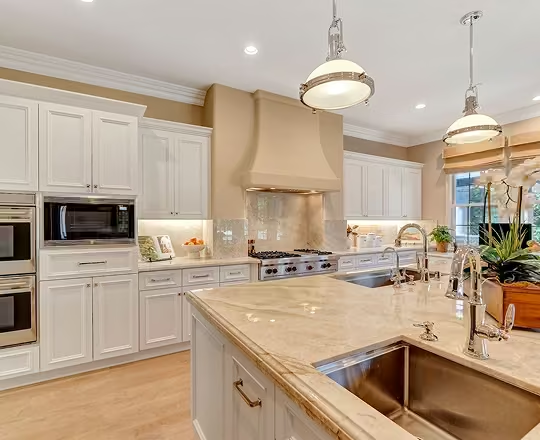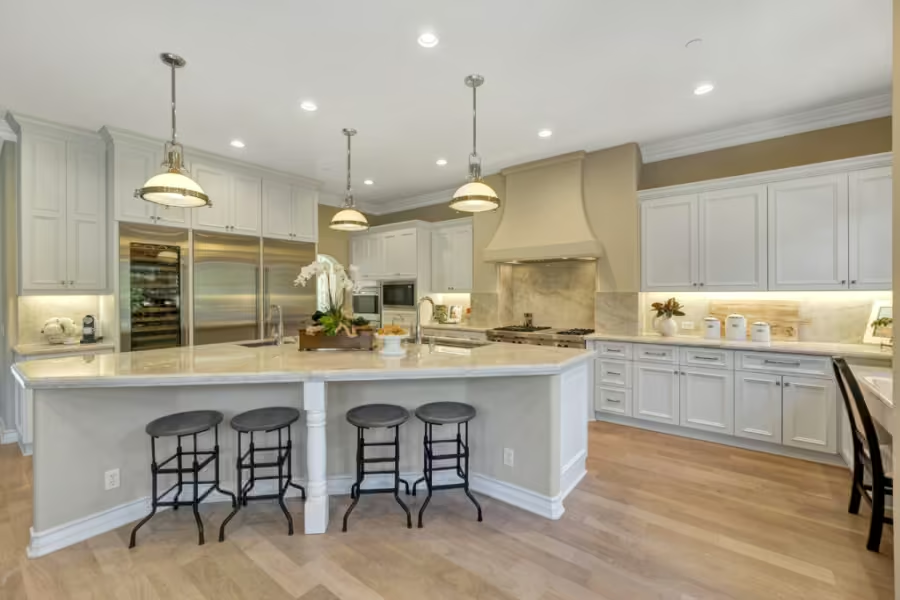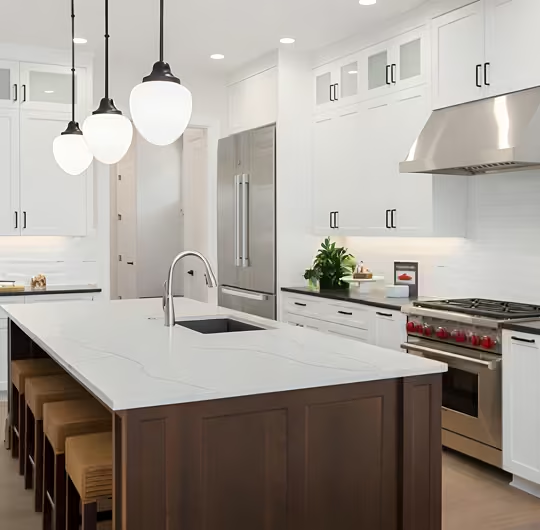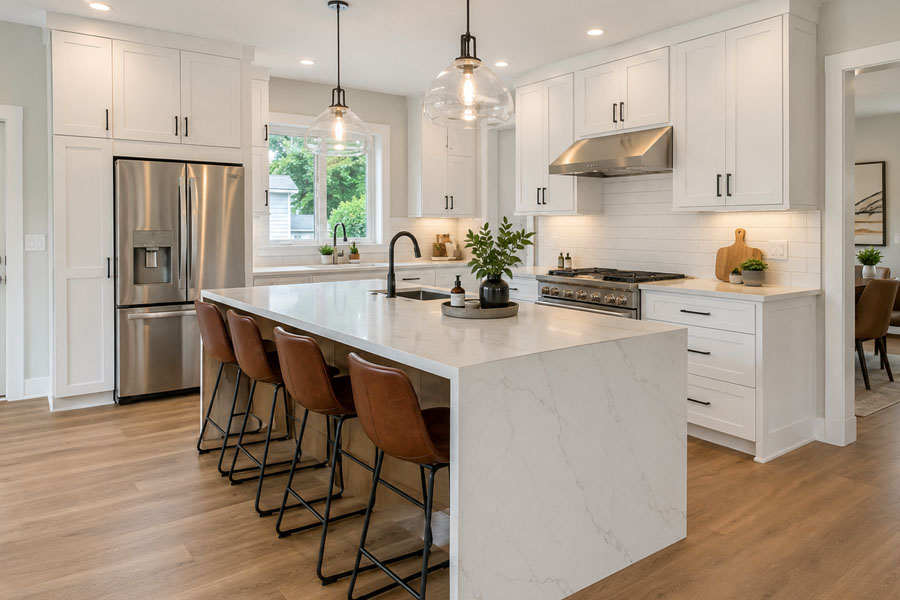
Limited kitchen space is common in many homes, especially in older properties or urban layouts. While expanding the room physically may require structural changes, there are several design strategies that can make a kitchen feel more open, brighter, and easier to navigate.
From choosing the right color palette to improving lighting and reducing clutter, small adjustments can significantly improve how a kitchen looks and functions. The tips below focus on practical design choices that maximize space while maintaining a balanced kitchen layout.
Why Small Kitchens Often Feel Cramped
A kitchen may feel smaller than it actually is due to a few common design issues:
- Dark color schemes that absorb light.
- Excess cabinetry or bulky appliances.
- Poor lighting placement.
- Visual clutter on countertops.
- Limited reflective surfaces.
Addressing these factors can improve both the perceived size and usability of the space.
Use a Consistent Color Palette
Color plays a major role in how spacious a room appears. Using a single-color or closely related color palette helps create visual continuity across walls, cabinets, and surfaces.
Tips for choosing colors
- Use light tones such as white, cream, light gray, or soft beige.
- Keep cabinet and wall colors within the same color family.
- Avoid strong contrast between upper and lower cabinets.
- Consider glossy or satin finishes that reflect light.
A cohesive palette reduces visual breaks and helps the kitchen appear more expansive.
Related Read: Kitchen Cabinet Colors
Maximize Natural and Artificial Lighting
Lighting can significantly influence how large a kitchen feels. A well-lit kitchen appears brighter, cleaner, and more open.
Ways to improve kitchen lighting
- Install under-cabinet lighting to illuminate countertops.
- Use pendant lighting above islands or dining areas.
- Choose LED lighting for better brightness and energy efficiency.
- Avoid heavy window coverings that block natural light.
If possible, allow natural daylight to flow through windows to reduce shadows and dark areas.
Choose Reflective Surfaces
Reflective materials bounce light around the room, helping the kitchen appear larger.
Common reflective elements include:
- Glossy cabinet finishes.
- Glass tile backsplashes.
- Polished countertops.
- Stainless steel appliances.
- Mirrored accents.
These surfaces improve brightness and add depth without increasing square footage.
Reduce Visual Clutter
Clutter is one of the biggest reasons small kitchens feel cramped. Even if storage is limited, organizing surfaces can dramatically improve visual space.
Practical decluttering tips
- Store rarely used appliances in cabinets.
- Use drawer organizers and vertical storage.
- Limit decorative items on countertops.
- Keep only everyday items easily accessible.
An uncluttered kitchen creates a more streamlined appearance.
Consider Minimalist Cabinet Design
Flat-panel cabinets or simple door styles create cleaner lines and reduce visual complexity.
Minimalist kitchen designs often include:
- Handle-less cabinets.
- Flat-panel doors.
- Built-in storage features.
- Integrated appliances.
This approach minimizes visual interruptions and contributes to a more open feel.
Use Open Shelving Selectively
Open shelving can make a kitchen appear more spacious by reducing bulky cabinetry. However, it works best when used strategically.
- Best uses for open shelves.
- Displaying frequently used dishes.
- Storing glassware or mugs.
- Highlighting decorative kitchen items.
Keeping shelves organized prevents them from becoming another source of clutter.
Choose the Right Sink Configuration
Large double sinks can occupy valuable counter space in compact kitchens.A single-basin sink often works better because it:
- Provides more usable counter space.
- Simplifies the countertop layout.
- Improves workflow around the sink area.
Small design changes like this can help improve functionality without altering the kitchen footprint.
Integrate Appliances When Possible
Integrated or built-in appliances help maintain visual continuity across the kitchen.
Examples include:
- Panel-ready dishwashers.
- Built-in microwaves.
- Counter-depth refrigerators.
Reducing appliance bulk helps maintain a cleaner layout.
Improve Storage Efficiency
Smart storage design prevents overcrowded countertops.
Ideas include:
- Pull-out pantry shelves.
- Corner cabinet organizers.
- Vertical dividers for trays and baking sheets.
- Deep drawers for cookware.
These solutions make better use of available space while keeping items accessible.
When a Layout Change May Be Necessary
While design adjustments can improve visual space, some kitchens benefit from layout improvements.
Common changes include:
- Removing a peninsula to open the floor plan.
- Adding a compact island with storage.
- Reconfiguring the work triangle.
- Updating cabinets to improve storage efficiency.
These upgrades are often part of broader kitchen remodeling projects that improve both functionality and layout flow.
Final Thoughts
Small kitchens present design challenges, but thoughtful planning can make a noticeable difference. Improving lighting, simplifying the color palette, reducing clutter, and optimizing storage can create a more open and functional space without major structural changes.
When combined thoughtfully, these strategies help improve both the visual appearance and everyday usability of a compact kitchen.
View Service: Kitchen Remodeling