Quartz countertops have become a staple in modern kitchen design, but their use extends far beyond the countertop surface itself because of its durability, low maintenance requirements, and wide range of colors and patterns.
From full-height backsplashes to waterfall islands, quartz offers design flexibility that works across a variety of kitchen styles. Whether you're planning a complete remodel or updating a few key elements, understanding the different ways quartz can be used can help you create a kitchen that balances aesthetics with everyday practicality.
This guide covers popular quartz kitchen design ideas, the benefits of using quartz in different applications, and important factors to consider before making your selections.
Why is Quartz a Popular Material for Kitchen Design?
Quartz remains one of the most commonly selected countertop materials because it offers a balance of performance and appearance.
Homeowners often choose quartz because it provides:
- A non-porous surface that resists moisture and stains.
- Consistent colors and patterns.
- Low maintenance requirements.
- Long-term durability.
- A wide range of design options.
Unlike some natural stone materials, quartz typically does not require regular sealing, making it easier to maintain in busy kitchens.
How Can Quartz Countertops Elevate a Kitchen Design?
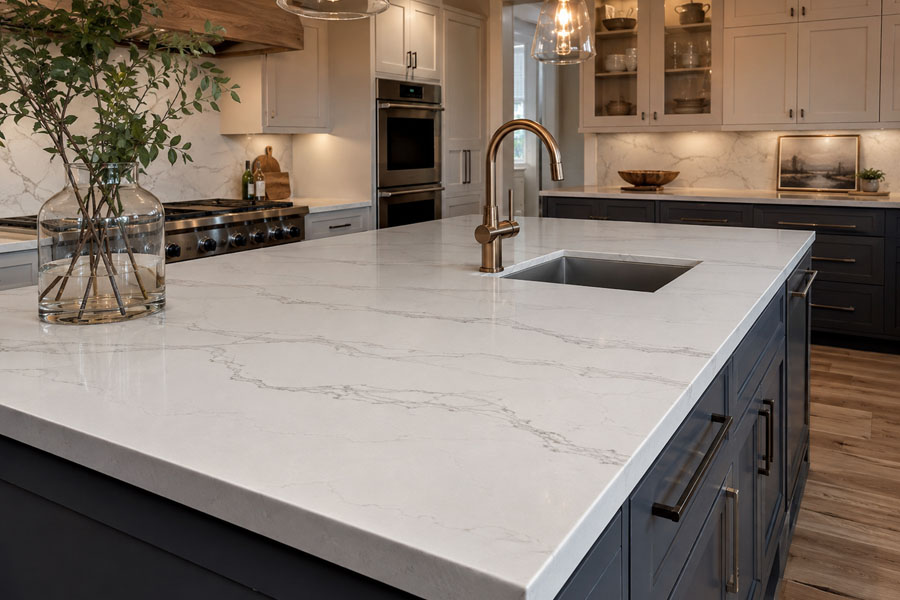
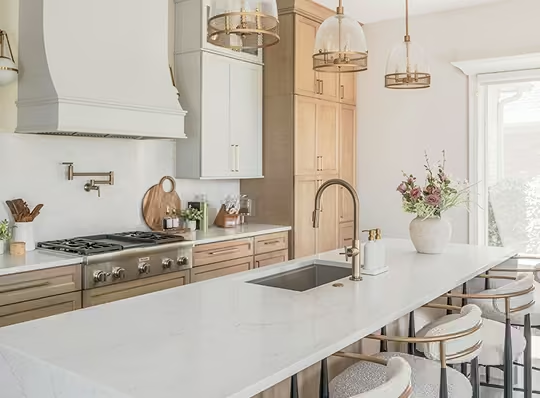
Countertops are often the visual centerpiece of a kitchen. Quartz offers flexibility in both color and pattern, allowing homeowners to complement a variety of cabinet styles and finishes.
Popular quartz countertop styles include:
- Bright white surfaces for modern kitchens.
- Marble-look quartz with dramatic veining.
- Soft gray designs for transitional spaces.
- Warm neutral tones for traditional kitchens.
- Dark quartz surfaces for bold contrast.
When selecting a countertop, consider how it will coordinate with cabinetry, flooring, and lighting throughout the room.
Related Read: Quartz Countertops Benefits
Can Quartz Be Used as a Kitchen Backsplash?
Yes. Quartz is increasingly being used as a backsplash material, particularly in kitchens seeking a clean and seamless appearance.
Unlike traditional tile backsplashes, quartz slabs can cover larger areas with fewer seams and minimal grout lines.
Benefits of a quartz backsplash include:
- Easy cleaning and maintenance.
- Consistent appearance from countertop to wall.
- Resistance to moisture and stains.
- A streamlined design aesthetic.
Many homeowners choose to extend the same quartz material from the countertop to the backsplash for a cohesive look.
What are the Benefits of a Full-Height Quartz Backsplash?
A full-height quartz backsplash extends from the countertop to the upper cabinets or ceiling. This design approach can:
- Create a focal point behind the range.
- Highlight natural-looking veining and movement.
- Reduce visual clutter.
- Eliminate numerous grout lines.
It is particularly popular in contemporary and transitional kitchen designs.
How Do Matching Quartz Countertops and Backsplashes Create a Cohesive Look?
Using the same quartz material on both surfaces can help unify the kitchen's design. Benefits include:
- Visual continuity.
- Simplified material selection.
- A cleaner appearance.
- Enhanced perception of space in smaller kitchens.
For homeowners seeking a minimalist or modern aesthetic, matching surfaces can create a streamlined look without introducing competing patterns.
Are Waterfall Quartz Islands Worth Considering?
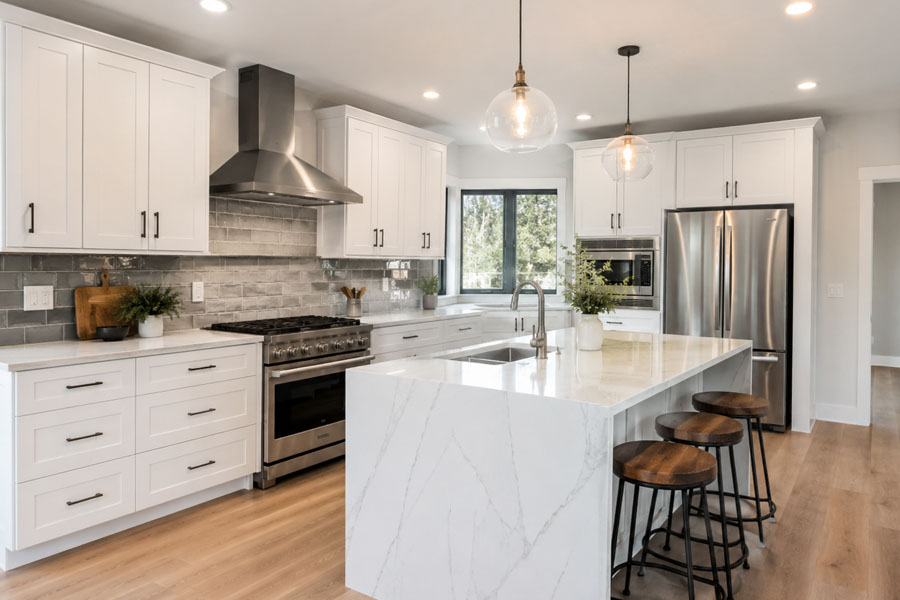
Waterfall islands extend the countertop material vertically down the sides of the island, creating a continuous surface. Many homeowners choose this design because it:
- Creates a striking focal point.
- Protects island cabinetry from everyday wear.
- Showcases quartz veining and pattern movement.
- Complements contemporary kitchen designs.
Waterfall edges work particularly well with larger islands where the quartz pattern can be fully appreciated.
Which Quartz Colors Work Best in Different Kitchen Styles?
The right quartz color depends on your kitchen's design goals and existing finishes.
Popular choices include:
- Bright whites
- Soft grays
- High-contrast black and white combinations
- Transitional Kitchens
Many homeowners prefer:
- Subtle veining
- Warm whites
- Neutral gray tones
- Traditional Kitchens
Common selections include:
- Cream tones
- Warm beige hues
- Natural stone-inspired patterns
When evaluating quartz colors, view samples under your kitchen's lighting conditions to see how they appear throughout the day.
How Can Quartz Help Create a Low-Maintenance Kitchen?
One of quartz's biggest advantages is its ease of maintenance. To keep quartz surfaces looking their best:
- Clean with mild soap and water.
- Wipe spills promptly.
- Use cutting boards for food preparation.
- Place hot cookware on trivets or heat pads.
Because quartz is non-porous, it generally resists staining better than many porous natural stone materials.
What Should You Consider Before Choosing Quartz for Your Kitchen?
Before selecting quartz, consider:
- Budget: Costs vary depending on
- Design selection
- Slab size
- Edge profiles
- Fabrication requirements
- Kitchen Layout: Large islands, extensive backsplashes, and waterfall edges may require additional material and fabrication.
- Overall Design Style: Choose quartz designs that complement
- Cabinet finishes
- Flooring materials
- Backsplash selections
- Hardware finishes
Taking time to evaluate samples in your space can help ensure a cohesive final result.
Final Thoughts
Quartz offers far more design flexibility than many homeowners realize. While countertops remain its most common application, quartz can also be used for backsplashes, waterfall islands, and other kitchen features that contribute to a cohesive design.
Whether your goal is a modern, traditional, or transitional kitchen, quartz provides a combination of durability, low maintenance, and design versatility that makes it a practical choice for many remodeling projects.
FAQs
Yes. Some homeowners use contrasting materials or colors to create visual interest while maintaining balance within the kitchen.
Quartz is non-porous and generally resists stains, making it easier to maintain than many porous materials.
It can be, but the island size and overall layout should be considered to ensure the design does not overwhelm the space.
Yes. Quartz is available in a wide range of colors and patterns that work well across multiple kitchen styles.