


Replacing vs. Refacing Kitchen Cabinets – What to Consider
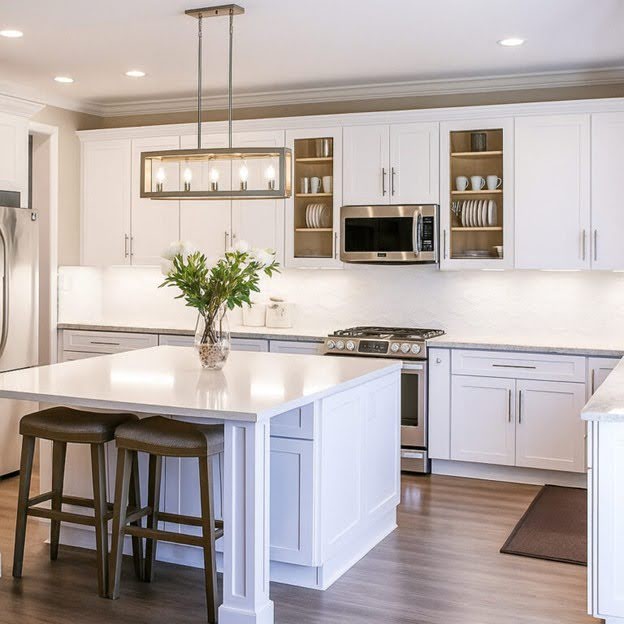
Kitchen cabinets play a major role in how a kitchen functions and feels over time. When cabinets start showing wear or no longer align with current needs, homeowners often weigh two main options, replacing cabinets entirely or refacing what already exists.
While both approaches can improve the kitchen’s appearance, they differ in scope, cost, time commitment, and long-term impact. Understanding these differences can help clarify which option aligns best with existing conditions and renovation goals.
Replacing vs. Refacing Kitchen Cabinets - Key Differences
| Factor | Cabinet Replacement | Cabinet Refacing |
| Scope of Work | Full removal and installation of new cabinets | Updates exterior surfaces only |
| Cabinet Layout | Can be changed or redesigned | Layout remains the same |
| Timeline | Longer due to demolition and installation | Shorter, with less disruption |
| Cost Range | Generally higher | Typically more cost-efficient |
| Structural Changes | Includes new cabinet boxes | Existing boxes must be sound |
| Material Waste | Higher due to removal | Lower since boxes are reused |
| Best Use Case | Damaged cabinets or layout changes | Solid cabinets needing a visual refresh |
What Does Replacing Kitchen Cabinets Involve?
Replacing kitchen cabinets means removing the existing cabinets and installing new ones. This approach allows for a complete reset of cabinet layout, materials, and storage configuration.
Key Characteristics of Cabinet Replacement
- Removal of existing cabinet boxes.
- Installation of new cabinet frames, doors, and drawers.
- Opportunity to redesign the kitchen layout.
- Often coordinated with broader remodeling work.
When Cabinet Replacement Is Typically Considered
Cabinet replacement is often explored when:
- Cabinet boxes are damaged, warped, or no longer structurally sound.
- Storage needs require a different cabinet configuration.
- The kitchen layout needs to be changed for better flow.
- Cabinets are being updated as part of a larger renovation.
What Is Kitchen Cabinet Refacing?
Kitchen cabinet refacing updates the visible surfaces of cabinets while keeping the existing cabinet boxes in place. This method focuses on appearance rather than structural changes.
How Cabinet Refacing Works
- Existing cabinet boxes remain intact.
- Doors and drawer fronts are replaced.
- Exterior cabinet surfaces are refinished or veneered.
- Hardware is typically updated for consistency.
Cabinet refacing is often discussed as an option when the cabinet structure is in good condition and the layout already functions well, which is why it is commonly referenced within kitchen cabinet refacing projects focused on surface-level updates.
Read More: What is Cabinet Refacing
When Refacing Is a Practical Option
Refacing may be appropriate when:
- Cabinet boxes are sturdy and properly aligned.
- The current kitchen layout meets functional needs.
- A visual update is the primary goal.
- Minimizing downtime and disruption is important.
Cost and Timeline Considerations
Cost and timing often influence the final decision.
- Replacement usually involves higher labor and material costs, along with longer project timelines.
- Refacing reduces labor time by preserving existing cabinet structures.
Because refacing avoids demolition, it is often completed more quickly and with fewer interruptions to daily routines.
Design Flexibility and Finish Options
Both options provide design flexibility, but in different ways.
- Replacement allows full control over cabinet size, configuration, and internal storage.
- Refacing focuses on door styles, finishes, veneers, and hardware updates.
Long-Term Performance and Maintenance
Longevity depends largely on the condition of existing cabinets and the materials used.
- New cabinets may offer longer structural lifespan.
- Refaced cabinets perform well when cabinet boxes are solid.
- Maintenance needs vary based on surface finishes and daily wear.
Evaluating cabinet box condition early helps avoid limitations later in the process.
Final Thoughts
Replacing and refacing kitchen cabinets address different needs. Replacement provides complete flexibility and structural renewal, while refacing offers a streamlined way to update the kitchen’s appearance without altering the existing layout. The right approach depends on cabinet condition, desired changes, budget considerations, and how extensive the overall update is intended to be.