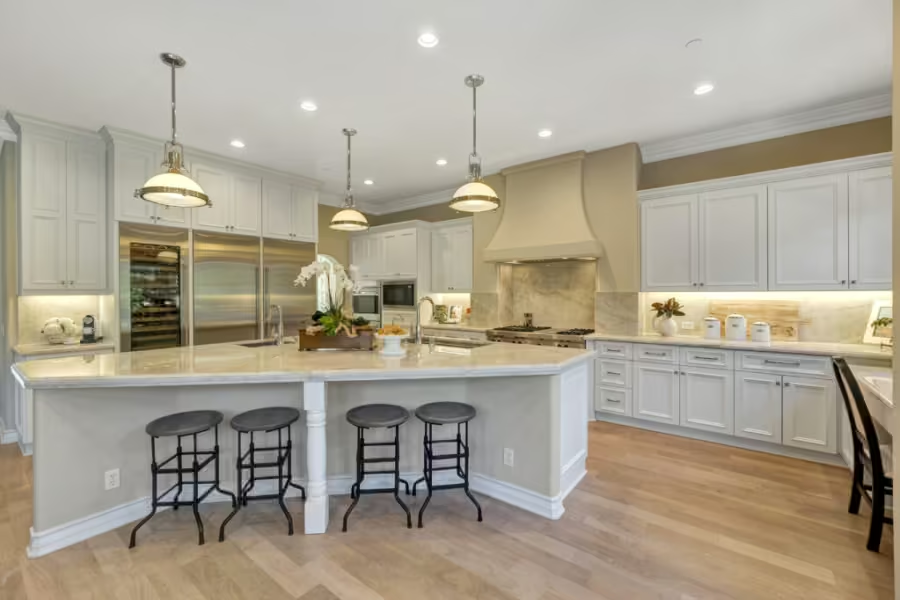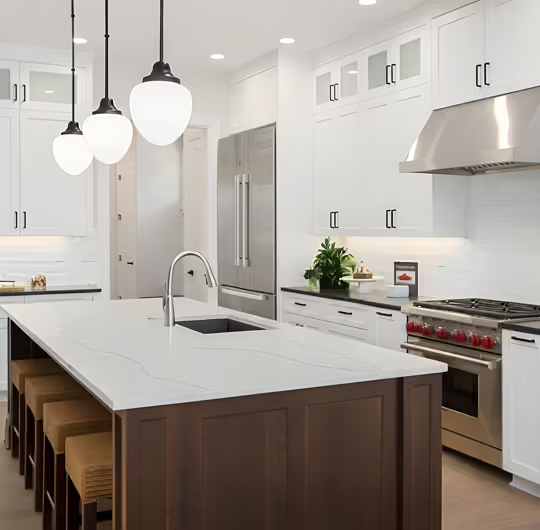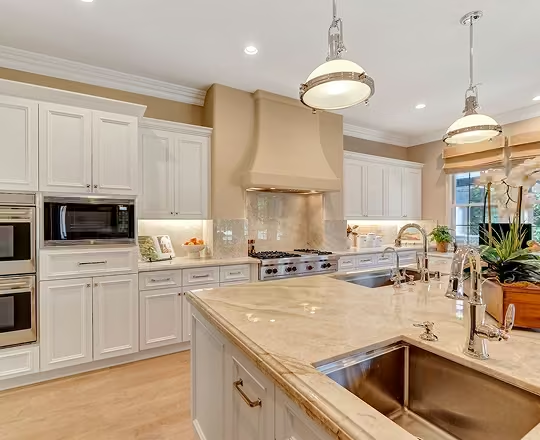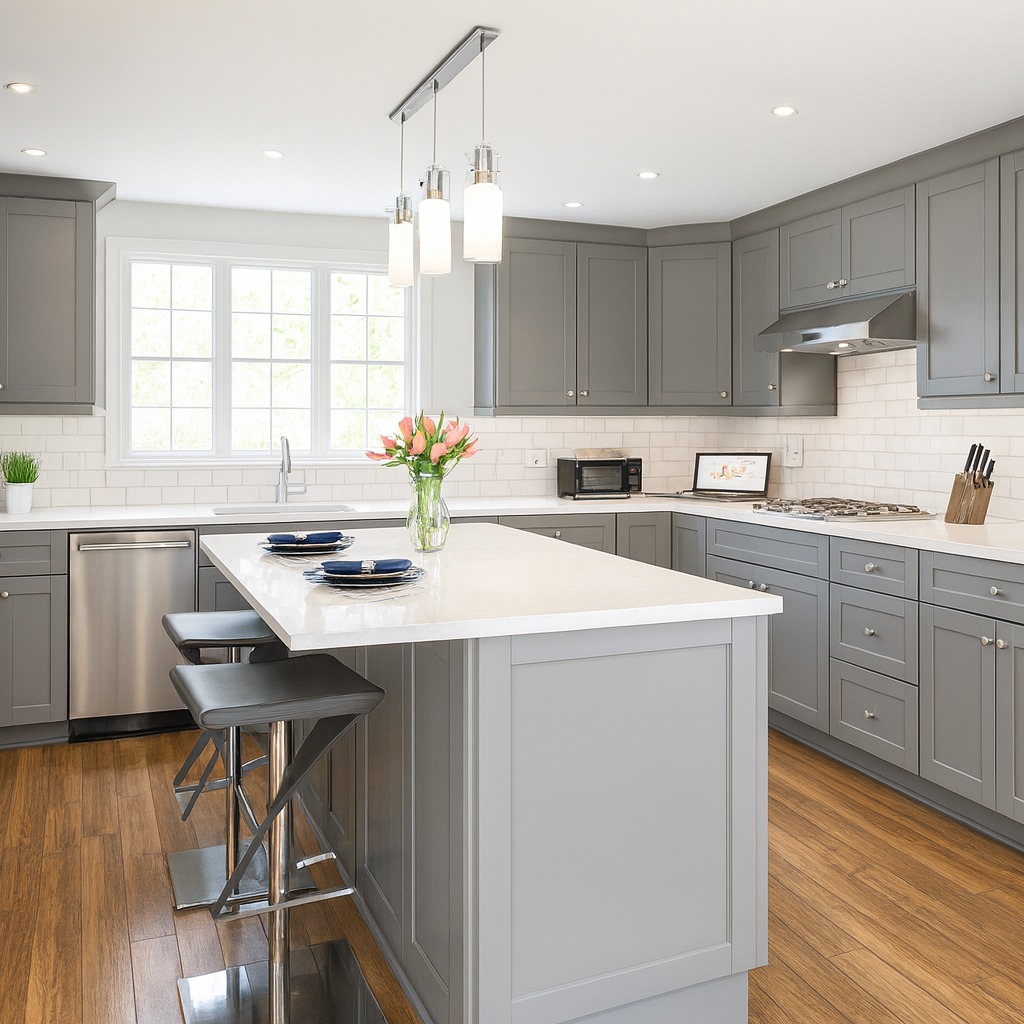
When planning a kitchen remodel, choosing the right cabinets is one of the biggest decisions you’ll make. Cabinets define the look and feel of your kitchen while also serving as essential storage. With so many cabinet types, door styles, and moldings available, it helps to understand your options before making a choice.
This guide breaks down the main types of kitchen cabinets, styles, and moldings along with practical tips to help you choose what works best for your home and budget.
What are the Main Types of Kitchen Cabinets?
Kitchen cabinets are generally divided into two main categories:
1. Framed Cabinets
- Built with a face frame that surrounds the cabinet box.
- Offer a more traditional, sturdy look.
- Often provide more durability and easier installation.
2. Frameless Cabinets
- Constructed without a face frame, creating a sleek, European-style design.
- Doors attach directly to the cabinet box for a seamless appearance.
- Ideal for modern or contemporary kitchens.
What Cabinet Door Styles Should You Consider?
Once you decide on framed or frameless, the next step is selecting the right door style. Options include:
- Raised Panel Doors: Solid wood with detailed edges, giving a rich, traditional look.
- Recessed Panel Doors: Simpler design with a flat center, often more budget-friendly.
- Flat or Slab Doors: Smooth, unadorned doors for a minimalist or modern aesthetic.
- Glass Doors: Add variety and openness with frosted, beveled, reed, or clear glass inserts.
Your door style has a major impact on your kitchen’s overall design, so consider how it complements your preferred theme.
What Options Exist Based on Budget and Customization?
Not all cabinets are created equal when it comes to cost, customization, and quality. Here are the most common types:
1. Stock Cabinets
- Pre-made in standard sizes and colors.
- Affordable and readily available.
- Limited customization but good for quick updates.
2. RTA (Ready-to-Assemble) Cabinets
- Sold unassembled, often from big-box stores.
- Cost-effective if you’re comfortable with DIY assembly.
- May be challenging if you’re not handy with tools.
3. Semi-Custom Cabinets
- Factory-built with some adjustable features.
- Available in various finishes and dimensions (typically in 3” increments).
- Strike a balance between cost and personalization.
4. Custom Cabinets
- Built to your exact specifications, maximizing space and style.
- Wide range of materials, colors, and designs.
- Higher investment but adds long-term value and functionality.
Explore: Kitchen Cabinets
What are the Different Types of Cabinet Molding?
Cabinet moldings may seem like small details, but they can dramatically elevate your kitchen’s design. Common types include:
1. Crown Molding: Finishes the top of cabinets, bridging the gap to the ceiling. Variations include:
- Traditional: Simple and classic, 3–6 inches high.
- Interior: Blends more with the ceiling, often multi-layered.
- Stacked: Multiple layers for tall ceilings.
- Stepped: Creates a staggered look with cabinets of varying heights.
2. Starter/Riser Molding: Provides extra height or support when paired with crown molding.
3. Corner Molding
- Outer: Covers exposed corners for a polished finish.
- Inner: Fills inside gaps where two panels meet.
4. Light Rail Molding: Installed under wall cabinets to conceal under-cabinet lighting and direct illumination onto countertops.
5. Base Molding: Wraps around islands or peninsulas, giving them a furniture-like appearance.
6. Toe Kick Molding: Installed at the base of lower cabinets, providing extra foot space for comfort while working at counters.
Should You Choose Stock, Semi-Custom, or Custom Cabinets?
Deciding between stock, semi-custom, and custom comes down to budget, timeline, and long-term goals:
- Go with stock cabinets if you need something quick and affordable.
- Choose semi-custom for a balance of personalization and cost.
- Invest in custom cabinets if you want full control over design, function, and materials.
If resale value is a concern, higher-quality cabinets (especially custom) can appeal to future buyers.
Final Thoughts
Kitchen cabinets are more than just storage, they’re the foundation of your kitchen’s style and functionality. By understanding the types of cabinets, door styles, and moldings available, you’ll be better equipped to choose the right option for your space and budget.
Whether you want something budget-friendly or a fully customized design, the right choice will make your kitchen both practical and inviting for years to come.