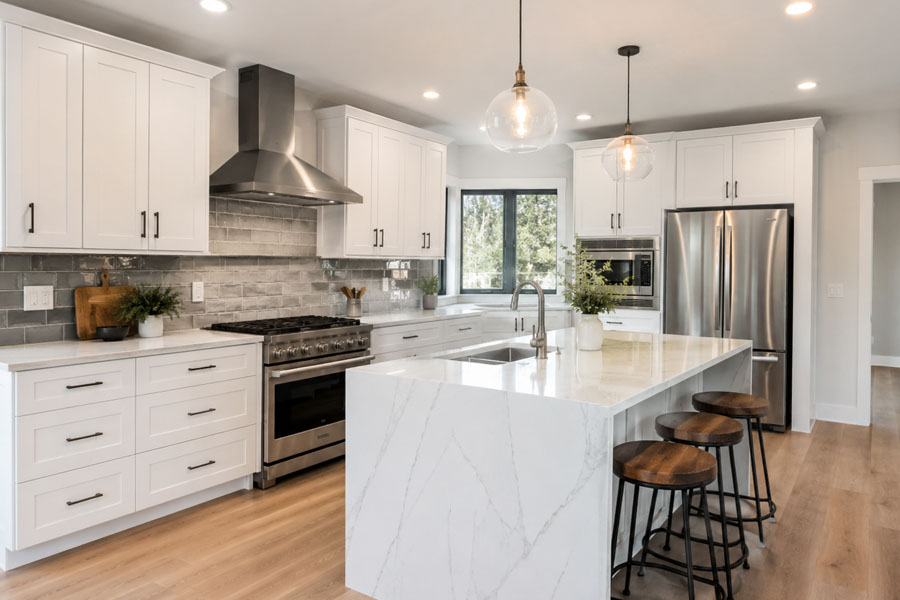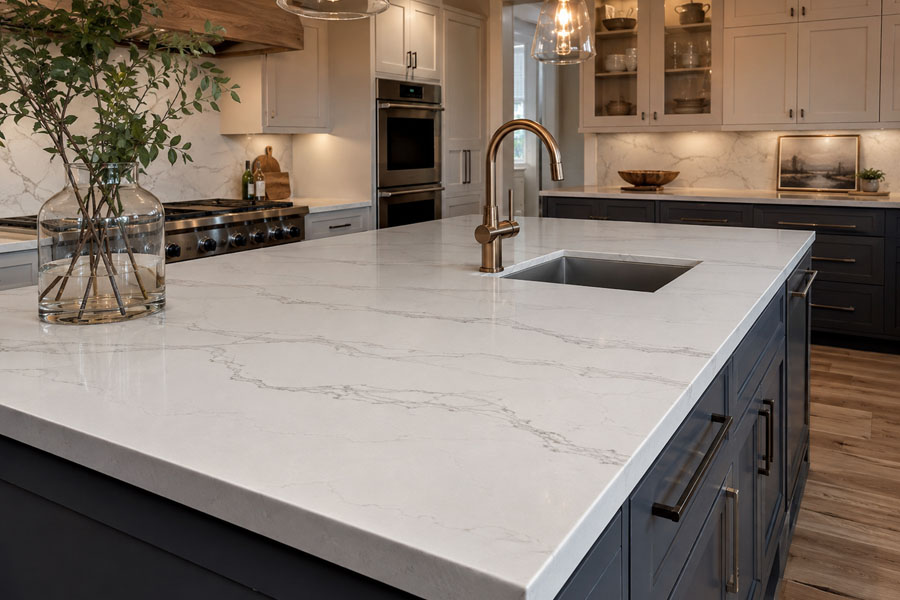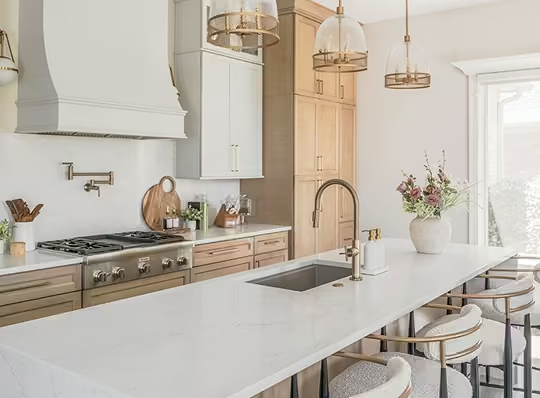
Quartz countertops remain one of the most popular kitchen countertop materials because they combine durability, low maintenance, and design flexibility. But while quartz offers several advantages for busy kitchens, it also comes with limitations homeowners should understand before making a decision.
This article explains the pros and cons of quartz countertops, how they compare to other materials, expected maintenance requirements, pricing considerations, and whether quartz is the right fit for your kitchen remodel.
Why are Quartz Countertops So Popular in Modern Kitchens?
Quartz countertops are engineered surfaces made from crushed natural quartz combined with resins and pigments. This manufacturing process creates a durable, non-porous surface that works well in high-traffic kitchens.
Homeowners exploring different kitchen surface options often choose quartz countertops because they combine durability, design flexibility, and easier maintenance compared to many natural stone materials.
Quartz is commonly selected because it offers:
- Consistent colors and patterns.
- Minimal maintenance.
- Strong stain resistance.
- Modern and traditional design compatibility.
- Long-term durability.
Unlike some natural stones, quartz does not typically require annual sealing, which makes it attractive for homeowners looking for easier upkeep.
What are the Biggest Advantages of Quartz Countertops?
The main benefits of quartz countertops include:
- Low Maintenance Requirements
Quartz is one of the easiest countertop materials to maintain. Daily cleaning usually only requires:- Warm water.
- Mild dish soap.
- A soft microfiber cloth.
Because quartz is non-porous, it resists:
- Food stains.
- Moisture absorption.
- Mold and mildew buildup.
- Bacteria penetration.
This makes it a practical option for busy households and frequent cooking.
- Strong Resistance to Stains and Scratches
Quartz performs well against:- Coffee spills.
- Wine stains.
- Cooking oils.
- Everyday surface scratches.
Its engineered surface creates a dense finish that handles regular kitchen use better than many softer natural stones. However, cutting boards are still recommended to prevent surface wear over time.
- Wide Variety of Colors and Patterns
Quartz countertops are available in:- Solid colors.
- Marble-look finishes.
- Concrete-inspired textures.
- Veined patterns.
- Matte and polished finishes.
Unlike granite slabs that vary naturally, quartz offers more visual consistency across the entire surface. This helps homeowners achieve a predictable design outcome during remodeling.
- No Sealing Needed
One major advantage of quartz is that it does not require sealing.
Natural stones like granite and quartzite often need periodic resealing to maintain stain resistance. Quartz eliminates this extra maintenance step, reducing long-term upkeep. - Consistent Appearance Across Slabs
Because quartz is engineered, colors and veining patterns remain more uniform. This consistency helps when:- Matching waterfall islands.
- Creating large kitchen surfaces.
- Designing modern kitchens.
- Coordinating backsplashes and cabinetry.
What are the Disadvantages of Quartz Countertops?
- Quartz Can Be Damaged by High Heat
Quartz countertops are heat resistant, but not heat proof. Direct contact with the below can can damage the resin within the countertop.- Hot pans
- Slow cookers
- Baking trays
- Air fryer baskets
Possible issues include:
- Discoloration
- Burn marks
- Surface cracking
Using trivets or heat pads is strongly recommended.
- Quartz Is Usually More Expensive Than Laminate
Quartz is considered a premium countertop material. Pricing depends on:- Brand
- Thickness
- Edge profile
- Color complexity
- Installation requirements
While quartz may cost more upfront, many homeowners consider the reduced maintenance and long lifespan worth the investment.
- Seams May Be Visible on Large Installations
Although professional installers minimize seams, they can still be visible in:- Large kitchens
- Waterfall islands
- Long countertop runs
Lighter colors and heavily veined patterns may make seams easier to notice.
- Quartz is Heavy
Quartz countertops are extremely heavy and require strong cabinet support. Before installation:- Cabinets may need reinforcement.
- Unsupported overhangs may require brackets.
- Older cabinetry may need structural updates.
How Does Quartz Compare to Granite and Other Countertop Materials?
| Feature | Quartz | Granite | Marble | Quartzite |
| Maintenance | Low | Moderate | High | Moderate |
| Sealing Required | No | Yes | Yes | Yes |
| Heat Resistance | Moderate | High | Moderate | High |
| Stain Resistance | High | Moderate | Low | Moderate |
| Color Consistency | High | Low | Moderate | Low |
| Durability | High | High | Moderate | Very High |
Read More: Quartz vs Granite vs Quartzite
What Types of Kitchens Work Best With Quartz Countertops?
Quartz countertops work well in kitchens where homeowners want a balance between durability, appearance, and easier maintenance. They are especially suitable for:
- High-traffic family kitchens.
- Open-concept kitchen layouts.
- Contemporary and modern kitchens.
- Homes with frequent cooking activity.
- Kitchens that need stain-resistant surfaces.
- Households looking for lower-maintenance materials.
Quartz is also commonly selected for:
- Large kitchen islands.
- Waterfall countertop designs.
- Light-colored kitchen palettes.
- Minimalist kitchen aesthetics.
Because engineered quartz offers more consistent colors and patterns, it is often preferred in kitchens where visual uniformity is important.
What Should Homeowners Know Before Installing Quartz Countertops?
Before installation, homeowners should consider:
- Cabinet strength and support.
- Sink compatibility.
- Countertop thickness.
- Edge profile selection.
- Seam placement.
- Appliance clearances.
Professional measurements and fabrication are important because quartz slabs are heavy and difficult to modify after installation.
When Does Quartz Make More Sense Than Natural Stone?
Quartz is often the better choice when homeowners prioritize:
- Easier maintenance.
- Consistent appearance.
- Modern aesthetics.
- Better stain resistance.
- Simplified cleaning routines.
Natural stones like granite and quartzite may appeal more to homeowners who prefer unique slab variations and higher heat resistance.
Related Read: Quartz Countertop Maintenance & Care
Are Quartz Countertops Worth It?
Quartz countertops are often considered worth the investment for homeowners who prioritize low maintenance, durability, and long-term appearance. They are especially practical for:
- Busy kitchens.
- Families with children.
- Frequent cooking.
- Open-concept homes.
- Homeowners who want minimal upkeep.
Quick Summary: When Quartz Makes Sense
| Quartz Is a Good Fit If You Want… | Quartz May Not Be Ideal If You Want… |
| Low maintenance | Maximum heat resistance |
| Consistent patterns | Completely natural stone variation |
| Easy cleaning | Lower upfront costs |
| Strong stain resistance | Outdoor countertop installation |
| Modern design flexibility | Rustic natural stone aesthetics |
Final Thoughts
Quartz countertops continue to be one of the most practical options for modern kitchens because they balance durability, design flexibility, and easy maintenance. While they are not completely immune to heat damage or wear, they offer long-term value for homeowners looking for a reliable countertop surface with minimal upkeep.
Comparing quartz against your cooking habits, maintenance expectations, and design goals can help determine whether it is the right material for your kitchen remodel.