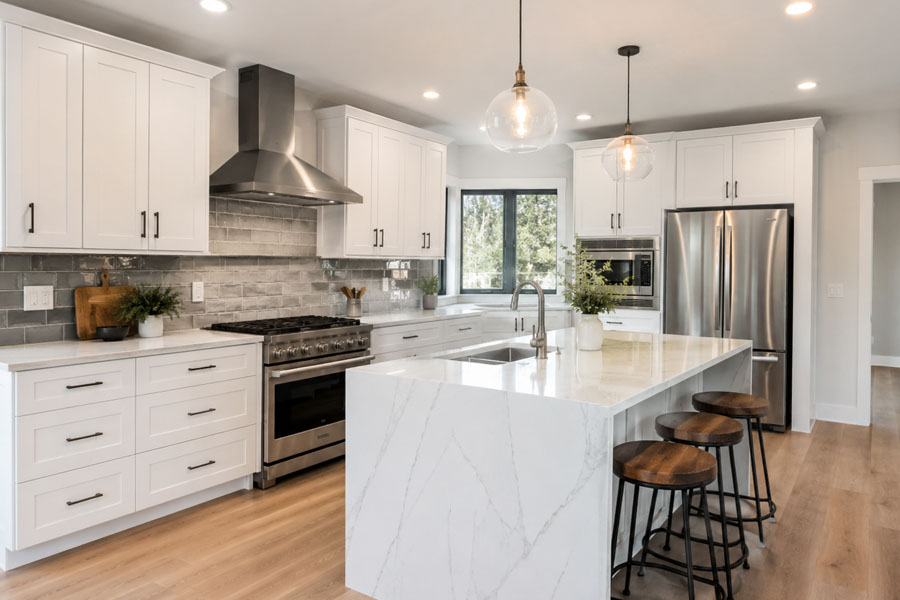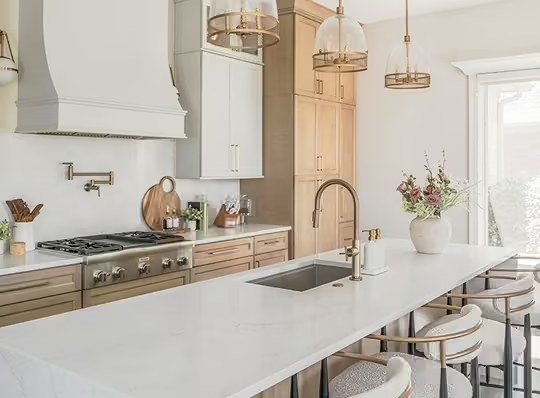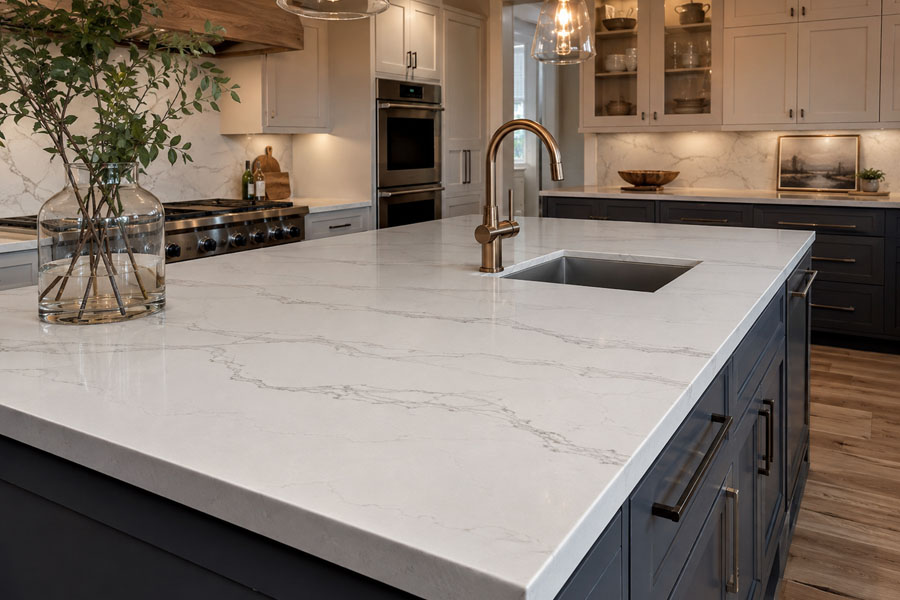
Choosing the right countertop material is one of the most important decisions in a kitchen remodel. Homeowners often compare durability, appearance, maintenance requirements, and long-term value before making a final choice.
Cambria quartz countertops remain a popular option because they offer the look of natural stone with the consistency and low maintenance of an engineered surface. In addition to performance benefits, Cambria is known for its extensive collection of colors and patterns that suit a wide range of kitchen styles.
This guide covers everything homeowners should know about Cambria quartz countertops, including advantages, disadvantages, costs, and maintenance requirements.
What are Cambria Quartz Countertops?
Cambria quartz countertops are engineered stone surfaces made primarily from natural quartz combined with resins and pigments. The manufacturing process creates a non-porous, durable countertop designed for everyday kitchen use.
Unlike natural stone slabs, engineered quartz provides more consistency in color and pattern while maintaining the appearance of premium stone surfaces.
Common applications include:
- Kitchen countertops
- Bathroom vanities
- Waterfall islands
- Backsplashes
- Laundry room surfaces
- Bar tops
Because quartz is non-porous, it does not typically require sealing, making it a lower-maintenance alternative to some natural stone materials.
Why Do Homeowners Choose Cambria Quartz Countertops?
Several factors contribute to Cambria's popularity in kitchen remodeling projects.
- Consistent Appearance: Natural stone often varies significantly from slab to slab. Cambria quartz offers more uniform colors and patterns, helping homeowners achieve a predictable design outcome.
- Low Maintenance Requirements: Unlike some natural stone surfaces, quartz countertops generally do not require regular sealing. Routine cleaning is typically enough to maintain their appearance.
- Wide Range of Designs: Cambria offers designs that range from subtle and understated to bold and dramatic. This flexibility allows homeowners to find options that complement both traditional and contemporary kitchens.
- Non-Porous Surface: Because quartz is non-porous, it is resistant to moisture penetration and easier to keep clean compared to many porous countertop materials.
View: Cambria Quartz Countertops
What are the Advantages of Cambria Quartz Countertops?
- Extensive Color Selection
One of the biggest advantages of Cambria quartz is the variety of available colors and patterns. There are numerous options available to fit different design preferences.
- Bright white countertops.
- Marble-inspired veining.
- Soft neutral tones.
- Dark dramatic surfaces.
- Coastal-inspired aesthetics.
- Durable for Everyday Use
Quartz countertops are designed to withstand daily kitchen activities, including food preparation, entertaining, and family use. Benefits include:
- Scratch resistance under normal use.
- Resistance to staining from common household spills.
- Strong structural performance.
- Long-lasting appearance.
- Easy Cleaning.
Most routine cleaning can be completed using:
- Warm water.
- Mild dish soap.
- A soft cloth or sponge.
This simple maintenance routine appeals to homeowners seeking convenience.
- Design Flexibility
Cambria designs can complement a variety of kitchen styles, including:
- Modern kitchens
- Transitional kitchens
- Farmhouse kitchens
- Coastal kitchens
- Traditional kitchens
What are the Potential Drawbacks of Cambria Quartz Countertops?
No countertop material is perfect for every situation. Understanding potential limitations helps homeowners make informed decisions.
- Higher Initial Cost
Quartz countertops often cost more than certain laminate and tile options. Factors affecting cost include:
- Design selection.
- Slab size.
- Edge profiles.
- Fabrication complexity.
- Installation requirements.
Premium patterns and larger installations generally increase project costs.
- Limited Heat Resistance
Quartz surfaces are durable but not completely heat-proof. Countertop appliances generating excessive heat can potentially damage the resin components within the material.
Using trivets and heat pads is recommended to protect the surface.
- Professional Installation Required
Quartz slabs are heavy and require specialized fabrication and installation equipment. Most projects require professional installation to ensure proper support and seam placement.
How Much Do Cambria Quartz Countertops Cost?
The total cost of a Cambria countertop project depends on several variables. Key factors include:
| Cost Factor | Impact on Price |
| Countertop size | Larger areas require more material |
| Edge profile | Decorative edges increase fabrication costs |
| Design selection | Premium patterns typically cost more |
| Cutouts | Sink and cooktop cutouts add labor |
| Installation complexity | Unique layouts may require additional fabrication |
Homeowners should obtain detailed estimates that include materials, fabrication, and installation to understand the full project cost.
How Durable are Cambria Quartz Countertops?
Quartz is generally considered one of the most durable countertop materials available for residential kitchens. With proper care, homeowners can expect:
- Resistance to everyday scratches.
- Resistance to common household stains.
- Long-term color stability.
- Strong performance in busy kitchens.
However, durability still depends on proper use and maintenance. Avoid:
- Cutting directly on the surface.
- Placing hot cookware directly on countertops.
- Using harsh abrasive cleaners.
How Do You Clean and Maintain Cambria Quartz Countertops?
Maintaining quartz countertops is relatively straightforward.
Daily Cleaning
For routine maintenance:
- Wipe surfaces with a soft cloth.
- Use warm water and mild soap.
- Dry the surface to prevent residue buildup.
Cleaning Tougher Messes
For dried spills or sticky residue:
- Use a non-abrasive cleaner approved for quartz.
- Gently remove debris with a plastic scraper if necessary.
- Avoid harsh chemicals that may damage the finish.
Products to Avoid
Avoid using:
- Abrasive scrub pads.
- Strong alkaline cleaners.
- Paint removers.
- Oven cleaners.
- Bleach-based products unless specifically approved.
How Do You Choose the Right Cambria Quartz Color for Your Kitchen?
Cambria offers a wide range of quartz designs, from subtle neutrals to bold veined patterns. Choosing the right color depends on your kitchen's overall design, lighting conditions, and desired level of contrast.
When comparing options, consider:
- Cabinet color
- Natural lighting
- Kitchen size
- Design style
- Existing finishes
How Does Cambria Quartz Compare to Granite?
Homeowners frequently compare quartz and granite before making a countertop decision.
| Feature | Cambria Quartz | Granite |
| Maintenance | Low | Requires periodic sealing |
| Appearance | Consistent patterns | Natural variation |
| Porosity | Non-porous | Porous |
| Heat Resistance | Good but limited | Excellent |
| Color Selection | Extensive | Limited to natural stone variations |
| Cleaning | Easy | Moderate |
The right choice depends on personal preferences, lifestyle, maintenance expectations, and design goals.
Related Read: Quartz vs Granite vs Quartzite
Is Cambria Quartz a Good Choice for Busy Kitchens?
For many households, the answer is yes. Cambria quartz can be a practical option for kitchens that experience:
- Frequent cooking.
- Family gatherings.
- Heavy daily use.
- Regular entertaining.
Its combination of durability, easy maintenance, and broad design selection makes it a strong contender for homeowners seeking a balance between aesthetics and functionality.
What Should You Consider Before Choosing a Cambria Countertop?
Before selecting a countertop design, evaluate:
- Your project budget.
- Kitchen usage habits.
- Preferred maintenance level.
- Desired aesthetic.
- Heat exposure risks.
- Long-term remodeling goals.
Comparing samples in your actual kitchen environment can help ensure the final choice complements the rest of the space.
Final Thoughts
Cambria quartz countertops remain a popular option for homeowners seeking a durable, low-maintenance surface with a wide range of design possibilities. From bright contemporary styles to warm traditional looks, the extensive selection of colors and patterns makes it easier to find a countertop that aligns with your kitchen design goals.
Before making a final decision, compare materials, review samples in person, and consider how the countertop will perform in your daily routine. Taking the time to evaluate both aesthetics and practicality can help ensure a countertop investment that serves your kitchen well for years to come.