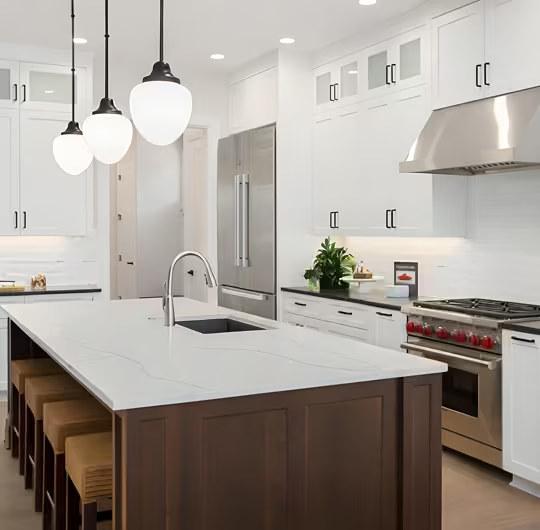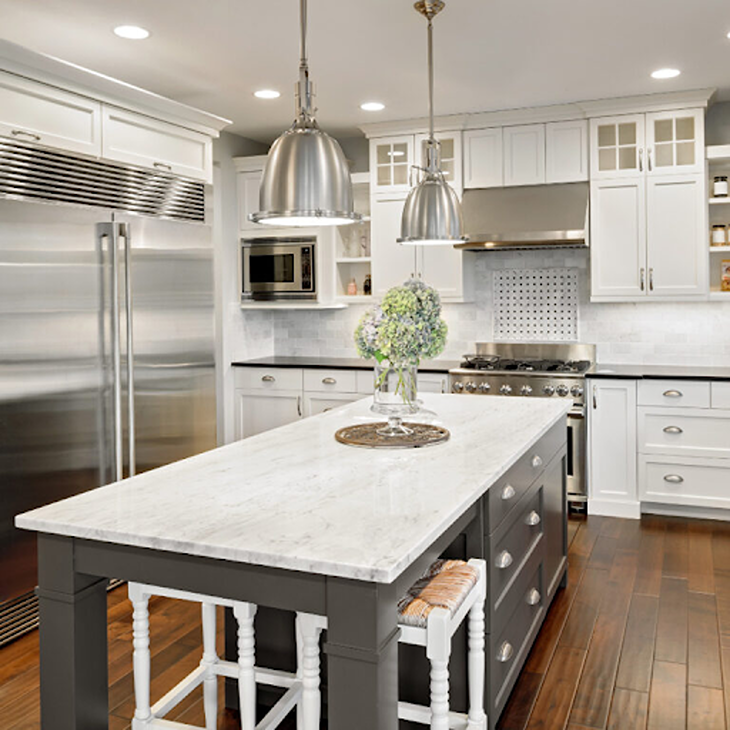
Thinking about a kitchen remodel? Whether you want to update an outdated space, improve functionality, or boost your home’s value, remodeling your kitchen is one of the most impactful home improvement projects you can take on. This guide walks you through when to remodel, common mistakes to avoid, and what to do once the work is done, all in one place.
What Is Kitchen Remodeling?
Kitchen remodeling involves making structural or design changes to improve functionality, aesthetics, and efficiency. It goes beyond cosmetic updates, often including:
- Replacing cabinets, countertops, and flooring.
- Upgrading appliances and fixtures.
- Modifying layouts for better workflow (like moving sinks or removing walls).
- Adding modern features such as under-cabinet lighting or expanded storage.
A remodel is usually more comprehensive than a simple renovation and is typically done every 10–15 years to keep your home modern, efficient, and aligned with your lifestyle.
Explore: Kitchen Remodeling Services
Kitchen Remodeling vs. Kitchen Renovation
The terms remodeling and renovation are often used interchangeably, but they’re not the same:
- Renovation focuses on restoring or updating existing elements (like painting cabinets or replacing hardware).
- Remodeling involves structural or layout changes, often requiring design planning and permits.
Learn More: Kitchen Remodeling vs. Kitchen Renovation
When Should You Remodel Your Kitchen?
A full kitchen remodel is a significant investment, so knowing when it’s truly necessary is key.
1. Every 10–15 Years Is Typical
Experts recommend updating your kitchen every 10 to 15 years, depending on wear and lifestyle changes. Materials and appliances age, and design trends evolve.
2. Signs It’s Time to Remodel
- Your Kitchen Feels Outdated: If your cabinets, countertops, or appliances feel stuck in another decade, it may be time for a refresh.
- The Space No Longer Fits Your Needs: A growing family or a passion for cooking may require a larger, more functional layout.
- Damage or Wear Is Too Much to Ignore: Water leaks, broken tiles, and worn-out cabinets often make remodeling the more practical choice.
- You Plan to Sell Soon: Kitchens are one of the biggest selling points of any home. Remodeling can boost resale value significantly.
Common Mistakes to Avoid During a Kitchen Remodel
A kitchen remodel can be exciting, but it’s also a big undertaking. Here are common mistakes homeowners make and how to avoid them:
1. Going DIY Without Experience
A full kitchen remodel requires expertise in plumbing, electrical, and structural design. Attempting it yourself can lead to costly mistakes and safety hazards. Hiring licensed professionals ensures the work is up to code and built to last.
2. Choosing Materials Based Only on Showroom Samples
What looks perfect under store lighting may not look the same in your home. Always bring home samples and test them in your kitchen’s natural lighting.
3. Underestimating Storage Needs
Modern kitchens require smart storage solutions. If you often struggle with clutter, plan for extra cabinetry, pull-out shelves, or pantry space.
4. Buying Cheap Appliances & Fixtures
Cheaper products may save money initially but often fail faster and may cost more in the long run. Invest in reliable, energy-efficient appliances and durable fixtures.
5. Forgetting Electrical Outlets
Today’s kitchens are home to many appliances - blenders, air fryers, coffee machines, etc. Ensure your remodel includes sufficient electrical outlets in convenient spots.
6. Mismatched Design Elements
A backsplash that clashes with countertops or hardware that doesn’t match cabinetry can affect your kitchen’s overall look. Stick to a cohesive design palette.
Read More: Top 11 Kitchen Layout and Remodel Mistakes to Avoid
What to Do After a Kitchen Remodel
Your kitchen is finally complete, but what now? Here’s how to settle into your new space:
1. Deep Clean Your Kitchen: Remodeling often leaves behind dust and debris. Wipe down cabinets, clean inside drawers, and disinfect all surfaces before moving items back in.
2. Decorate and Personalize: Add finishing touches like open shelving, a breakfast nook, or under-cabinet lighting. Consider plants, artwork, or decorative storage baskets to make the space feel warm and inviting.
3. Learn Care Guidelines: Each surface - marble countertops, stainless steel appliances, hardwood floors - has its own maintenance requirements. Familiarize yourself with care instructions to keep your kitchen looking new.
Read More: Kitchen Cleaning and Maintenance Tips
4. Organize Your Space: Before filling cabinets, plan how to store items efficiently. Group commonly used items together and take advantage of new storage features like pull-out shelves or lazy Susans.
5. Enjoy and Maintain: Once everything is organized, start enjoying your new space, but remember, regular maintenance is key to preserving your investment.
Tips for a Smooth Kitchen Remodeling Experience
- Communicate Clearly: Stay in regular contact with your contractor.
- Plan Ahead: Secure permits early and choose materials before demolition begins.
- Set a Realistic Timeline: Expect a kitchen remodel to take 6–12 weeks, depending on complexity.
- Keep a Contingency Budget: Set aside at least 10–20% for unexpected costs.
- Document Everything: Save receipts, plans, and warranties for future reference.
Related Read: Kitchen Remodel Planning Guide
Final Thoughts
A kitchen remodel is one of the best investments you can make for your home. From deciding when it’s time to remodel, to avoiding common pitfalls, and finally caring for your space post-remodel, thoughtful planning ensures a beautiful and functional result that lasts for years.
FAQs
Read More: Kitchen Remodeling vs. Refacing